Sunday, April 20, 2014

Top 10 Reasons...


. . . you might not want to rent a brand new Mercedes in Spain

  
10.   The local drivers
As previously mentioned, people in Lisbon, Portugal don’t pay any attention to street signs or lanes.  Of course it's their city, so they can drive however they want to!  It just made it scarey for ME.  Tim handled it fine!


 9.   Spanish roundabouts
The roundabouts really weren’t that big of a deal.  They work the same way they do here--the cars already in the circle have the right-of-way.  The difference in Spain’s roundabouts and our roundabouts is that theirs have multiple lanes.  And we couldn’t figure out why!  If you’re in the circle, it’s because you’re going to turn off in another direction.  So why would you be in the inside lane?  And if you happen to get stuck in the middle lane, how do you exit with cars zooming by you on the right?

 8.   Toll roads
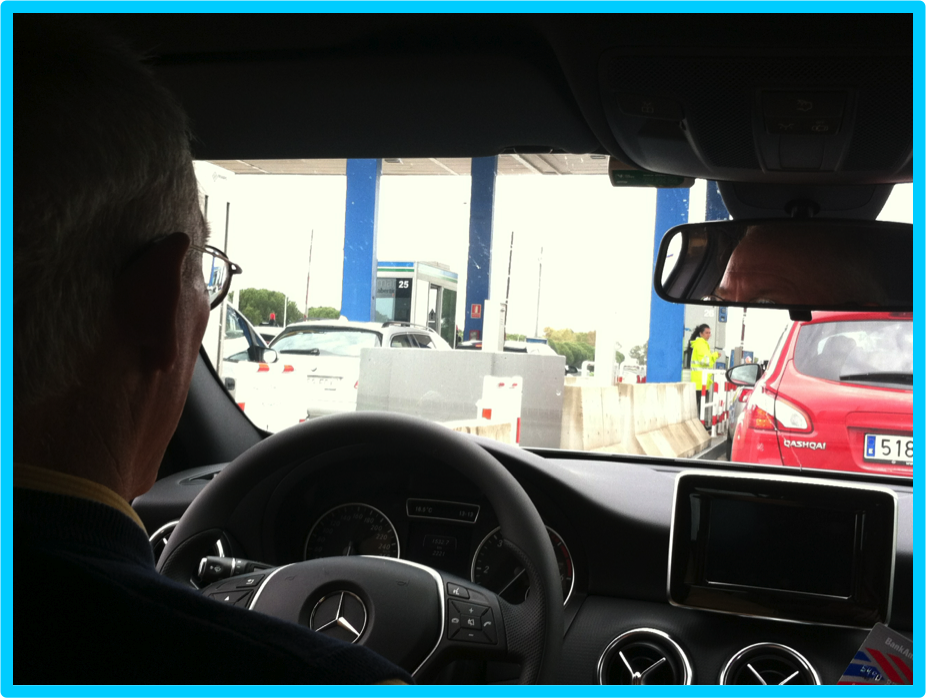
Once again, the toll roads weren’t that big of a deal.  They were GREAT roads!  But when you’re driving along and come up on the tollbooths and don’t know which lane to get in because you don’t understand the language, it’s a problem.  The first time we went through, attendants were manning the booths.  We’re not sure what Olivia said to the attendant, or what the attendant said to Olivia, but she waved us through and we didn’t pay. 

 7.   Toll roads again
The second time we encountered a tollbooth, there were two types of lanes—manual and tarjeta.  By the time Olivia translated to us that those words loosely meant “pay money” and “use a card”, we were in the “card” lane with cars backing up behind us, but we didn’t know what kind of card we needed.  The Spanish equivalent of an E-Z pass???  Olivia said, “Daddy, just put a credit card in there!”  He did, and the gate went up.  Whew!

 6.   And more toll roads
They probably ended up costing $100 or more!

 5.   Parking decks
Olivia knew of a great parking deck in Huelva, right around the block from where we were staying, and it only cost €5 to park!  Except one time when we went to get the car out, and it was around €19, which is about $24!  Olivia tried to explain to the parking attendant that it was supposed to be €5, but with no success.  Turns out you had to press the RED button to get your €5 ticket!  Hmmmm.

 4.   Another parking deck
Olivia had also scoped out a great parking deck in Seville, just right across the road from a beautiful park, which we walked through to get to the Plaza de Espana.  (She had really done her homework and was such a wonderful tour guide!)  But at the end of the day, the machine ATE our parking ticket, and the arm wouldn’t come up.  And there were no parking attendants in sight.  This time Olivia pressed a “call” button and talked to someone who ended up talking her through steps to get us out.  It worked!  Thank goodness she speaks Spanish fluently!!

 3.   LACK of parking decks
When we arrived in Tarifa to take the ferry across to Tangier, the parking lot was closed because there were no more spaces.  Tim pulled over so that Olivia and I could go in and get our ferry and tour vouchers, and he said that he would find a place to park and meet us back there.  We waited.  And waited.  And waited.  And realized that he couldn’t read the Spanish signs, had no euros with him, and didn’t have a way to contact us.  STRESS!  He finally made it back, but had parked at least a mile away in a spot that he really wasn’t sure was legal.  But when we got back that evening, and walked a mile back to where he had parked, the car was still there—unharmed. We’re just thankful he remembered where he had parked!

 2.   Processions
Oh my goodness!!  We arrived in Granada after dark, with the processions in full swing.  Olivia was directing us to our hostel with the GPS on her phone, but every time it told us to turn, the road was blocked because of the processions.  Tim would circle the block, and eventually we would find a road or alley that would get us closer to our destination.  Except that all those turns eventually landed us right in the city center with hoards of people.  Ours was the ONLY vehicle on the streets.  We couldn’t go any further because of the crowds, and realized that we had somehow ended up at the cathedral, the same cathedral where the processions were ending.  There was no way out.  People were looking at us like we had lost our minds.  Olivia got out to help Tim get the car turned around without killing any pedestrians. (I lay down in the back seat and covered my head!)  He got turned around, but was now driving the wrong way on a one-way street. (Not that it mattered—there were NO cars, only millions of people!)  Finally we saw a policeman!  Olivia was so excited because we had found somebody to help us.   She hopped out and ran up to him, but before she could say a word he said to her (in Spanish of course) “Just tell me.”  In other words, “What in the world are you doing with a car in this crowd, and why are you on a one-way street going the wrong way?”  She explained in lovely Spanish, and he helped us find a place to park, and told us to leave the car there until morning when the hotel owner could help us.  So Tim parallel parked with 1 inch to spare in front and back, we hauled our suitcases out, and walked until we found our hostel.

And the number 1 reason NOT to rent a car in Spain…
My nerves can't take it!  
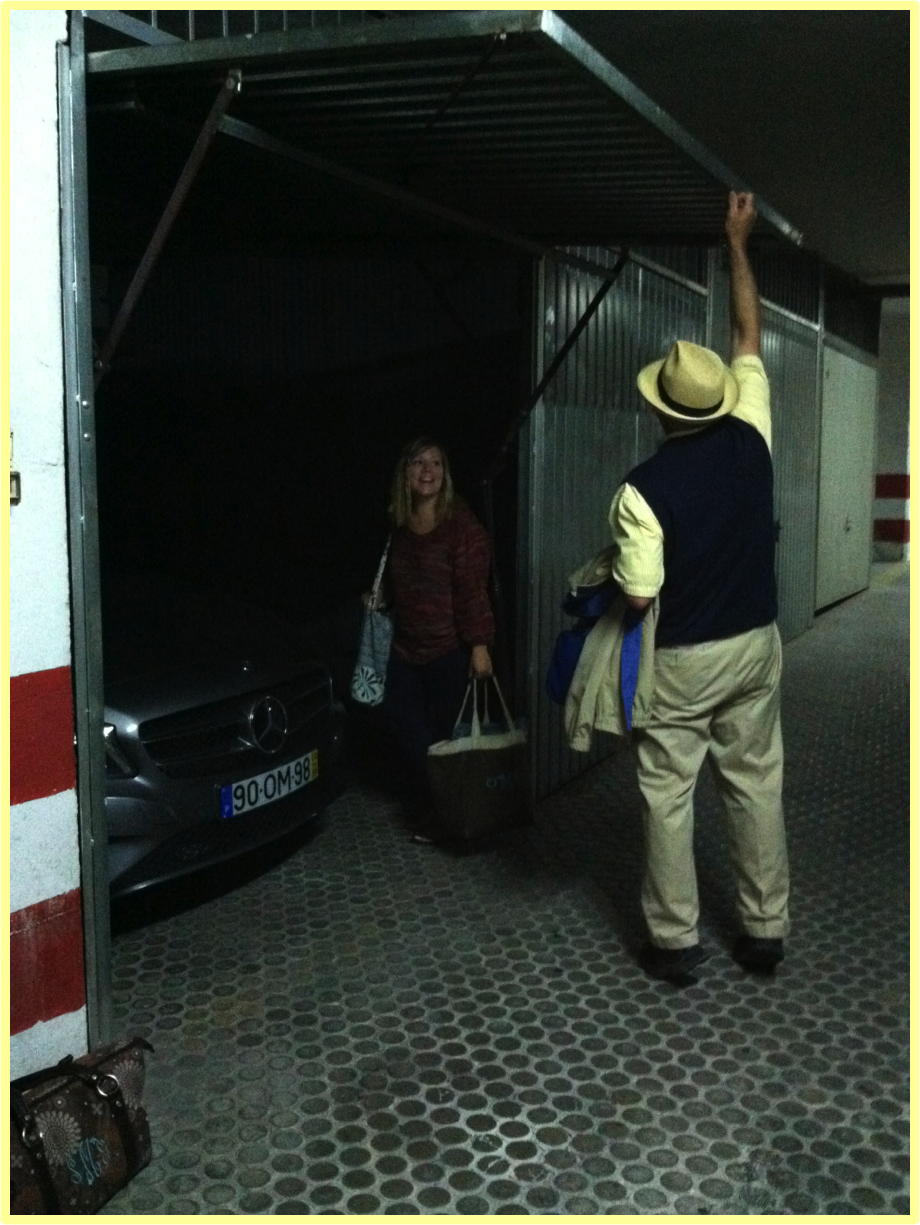


These pictures are right outside the hostel where we finally made it to the night before.  Tim went to find the car while Olivia and I got ready for the day.  We were a little nervous that he wouldn't be able to find the car, and that if he did he wouldn't be able to find the way back to the hostel because of so many one-way streets.  (Tim said that the streets were so narrow you could pick your produce from the stores as you drove by!)  But with a little help from the "inn keeper", Olivia and Tim managed to find the car, bring it back, and park it in an underground parking deck, where we left it until it was time to leave Granada!


Although having the rental car was the most nerve-wracking part of our trip (to me--Tim loved it!), we couldn't have seen and done as many things without it.  And the scenery while driving on the roads in Portual AND Spain was beautiful.


I was so excited to see this iconic Spanish bull on the roadside!

One of the "funky" bridges we went over!

The Spanish country-side had windmills everywhere.  In the more mountainous parts of Spain, near Granada, they seemed to be on every mountain-top.  I would love to know more about them!


We saw beautiful pastures with grazing horses, cattle, and sheep.  I wanted to stop and take pictures, but there was never a place to pull over.  No shoulders on the sides of the road!  This picture was taken through the window.


These pictures don't do them justice, but orange and olive groves grew EVERYwhere in Spain.  There were also a lot of strawberry fields--they are one of Spain's greatest exports.  We also saw fields with plants that we weren't sure of, and found out later that they were sunflowers.  Spain produces a lot of sunflower seeds, called pipas, which they enjoy as a snack food, and they also export sunflower oil.


There were BEAUTIFUL mountains in Spain (Sierra Nevada Mountain Range), but so much of the country-side was rolling mountains and meadows like these.  So pretty!

Without our little rental car, we wouldn't have been able to experience Spain the same way!


Thank you Tim!  You were amazing!!
(Can we use public transportation next time?)


Saturday, April 19, 2014

Semana Santa - Holy Week


Our first view of the processions was from Olivia's balcony
We knew when we planned our trip to Spain that we would be visiting during Semana Santa, or Holy Week, but we really didn't know what that meant.  Olivia had told us that we would see processions, but we really didn't know what that meant.  We found out--on our very first night in Spain!

We arrived in Huelva in the late afternoon, took our suitcases in, and immediately went back out to go see Olivia's apartment.  Not an easy task!  The streets were so crowded that we couldn't get there.  We kept having to change directions, and walk through alleys, and push through crowds.  This was our introduction to Semana Santa.

We learned quickly that each afternoon during Semana Santa, traffic is closed off in the city centers, processions take over, and pueblos, towns, and cities are transformed.  First you hear the drums, then you see hundreds of people gathering in the streets, then you smell burning candles and incense.  Brass bands play very mournful music, and suddenly you’re in another world where people cover their faces, wear robes and pointy hoods, and carry floats with their necks and heads--all to commemorate the crucifixion and resurrection of Christ. 


 The bands were amazing--mournful and moving.  Some had fancy uniforms and marched in formation.  Some wore suits and kind of ambled along.  And they all were so TOUCHING!


The incense was a little overwhelming.  The carriers swung gold (brass?) boxes back and forth so that the smoke filled the air.


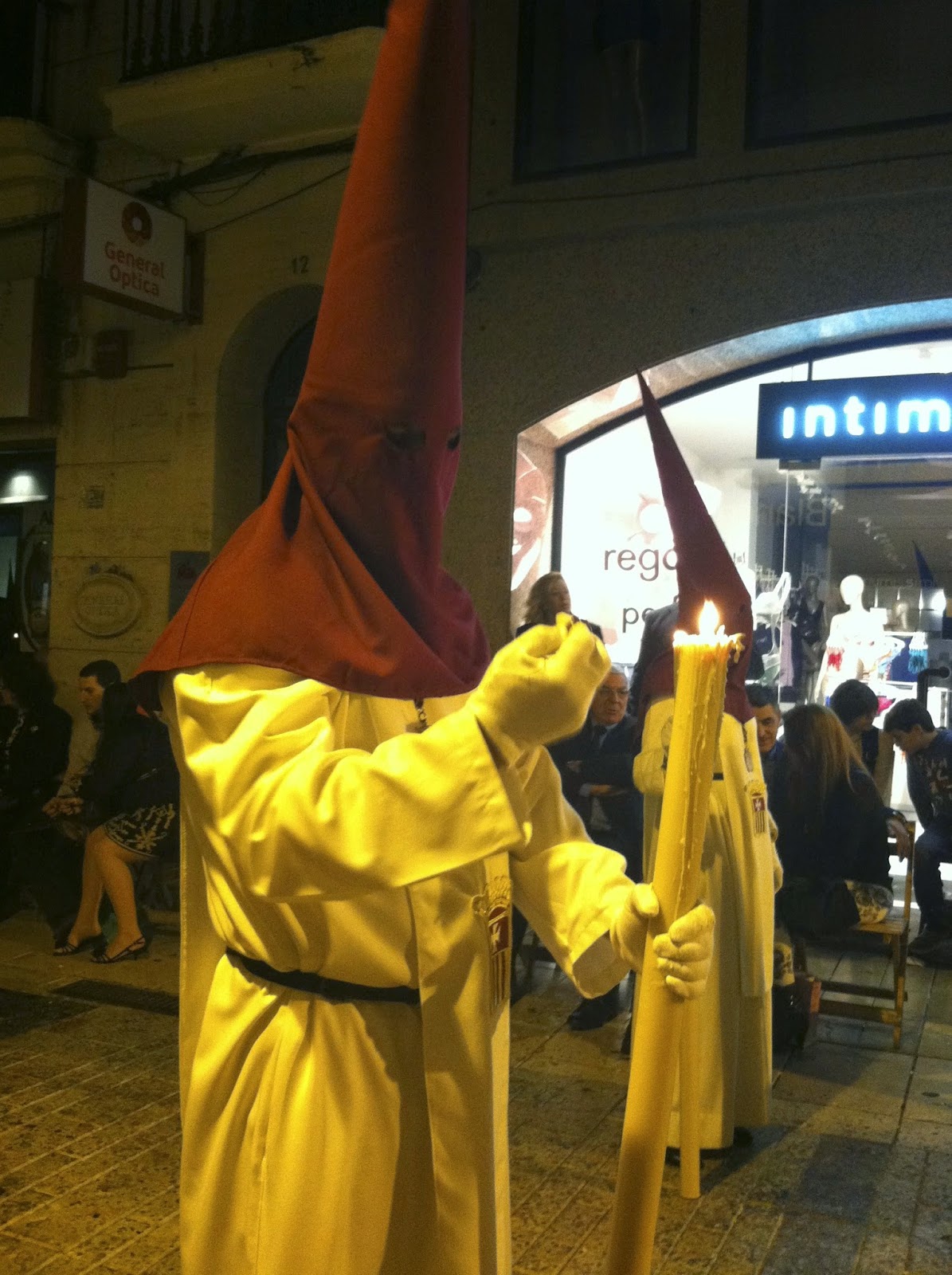
Children would run out and try to get the candle carriers to drip wax in their hands, and they would form wax balls.  I guess the point was to see how big they could make the ball.    The guy on the right (above) was dripping his wax into his gloved hand into the shape of a peace sign.  Not sure he had a lot of serious intent, but maybe it meant something that I don't know about.

This man (left) wouldn't drip his wax for anybody, and he wouldn't talk to anybody.  He was very solemn, and was counting rosary beads as he walked in the procession.

The men (and sometimes women?) who wear the pointy hoods are called Nazarenos, which means “penitent ones”.  The cones (pointy hoods) symbolize “rising towards the heavens”, and are supposed to bring the wearer’s penitence closer to heaven.  The Nazarenos are part of the cofrades, or the religious associations that care for the images of Christ and Mary that are used in the processions.  They are members of religious fraternities and brotherhoods. 


Some men walk barefooted to show extra penance.  The processions go on all week long, but the penitents walk all night long on Thursday night.  We woke up on Friday morning to the sound of beating drums.
 Some walked barefooted, wore chains around their ankles, and carried a cross as Jesus did.


Children participate too.  There were even babies in strollers wearing the costumes.  (The potato chips cracked me up!  Walking all that way makes good little Catholic boys hungry!)

The costaleros are the ones in white who actually carry the extremely heavy floats on their shoulders and necks!  They practice for months to get the rhythm and speed right.  They wear rolled head scarves that help protect their skin so that it doesn’t get rubbed raw.  In this picture, they had stopped and were switching out costaleros.  This picture was taken from the balcony of our apartment, and this is what we woke up to on Good Friday.


We weren’t there to see the clean-up, but we did wonder what happens to all the wax from thousands of candles that is dripped on the streets during the processions!  I looked it up after we got home, and found out that each town has crews equipped with hot water pressure washers and cleaning supplies to get all that wax out of the brick, tile, and cobblestone cracks.   I guess it's a good way to get your streets cleaned at least once a year!

They also have to have extra crews to pick up the tons of trash left by so many visitors.  And extra crews for security.  And extra crews to whip the town in shape before Holy Week.  I think the expense is off-set by all the extra money being spent by the thousands of visitors each year.  It's a huge production!


There are also crews that set up seating along the main avenues and outside the cathedras.  Locals pay to have a good seat, and they reserve them WAY in advance.


Each elaborate float has either Jesus OR some version of the Virgin Mary.


The pictures just don't do them justice.


It's hard to explain how we felt being part of this Easter celebration.  Tim and I watched with tears in our eyes.  For some, I'm sure Semana Santa is a great holiday where children are excited because they are out of school for a week, and their parents are happy because they have a week away from work.  Families gather, and friends meet in restaurants until 2 AM when the processions have ended for the evening.  For some, it could simply be a tradition that may or may not have lost its meaning for them. 

For us, it was one of the most somber and thought-provoking Easter celebrations we have ever experienced!


Live to Eat!

We started our dining adventure in Portugal, where our choices were PEIXE or CARNE--fish or meat.  We had no idea what KIND of fish or what KIND of meat we were ordering,  but the fish we got both times was fried with the heads on.  It was good!  We learned that carne refers to beef and pork.  I'm really not sure what kind of meat I had.  Maybe ox tail?  The fish and meat were served with two sides, usually rice and potatoes.  In the first restaurant where we had lunch, the server spoke NO English, and she kept telling us our choices in Portuguese, louder and louder as if she said it enough we would understand (the way we all tend to do).  We finally just pointed and hoped we liked what we got.  We did! 


In several restaurants, Olivia ordered different tapas for us.  I had choco frito, or fried cuttlefish.  I found out after I ate it that cuttle fish belongs to the same family as squid and octopus.  Cuttlefish have eight arms and two tentacles, and suckers to catch their prey.  Yum.

Tim had one of Olivia's favorite dishes, carrilleras--pig cheek with potatoes and fried egg.

We had croquetas in Granada, which are fried potato "balls" with stuff in them, like cheese or ham.  I had tried, without success, to make these for Olivia's going-away party.  I found out why she likes them so much!


One of our very favorite tapas was a seafood salad, salpicon, with red and green peppers, onions, crab and shrimp in a sweet dressing.  This is what it looked like the first time we ordered it, but the next time it had corn and pineapple instead of peppers, and the dressing was thicker and "whiter".  Not sure what the difference was, but it was delicious too.  I'm going to try to make both versions!

Another tapas we LOVED was fried zucchini with honey drizzled on it.  Oh my goodness!


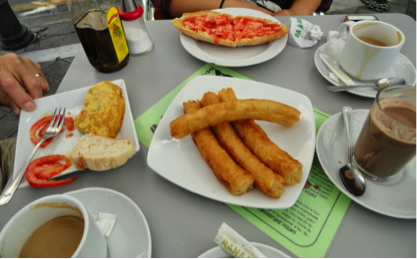
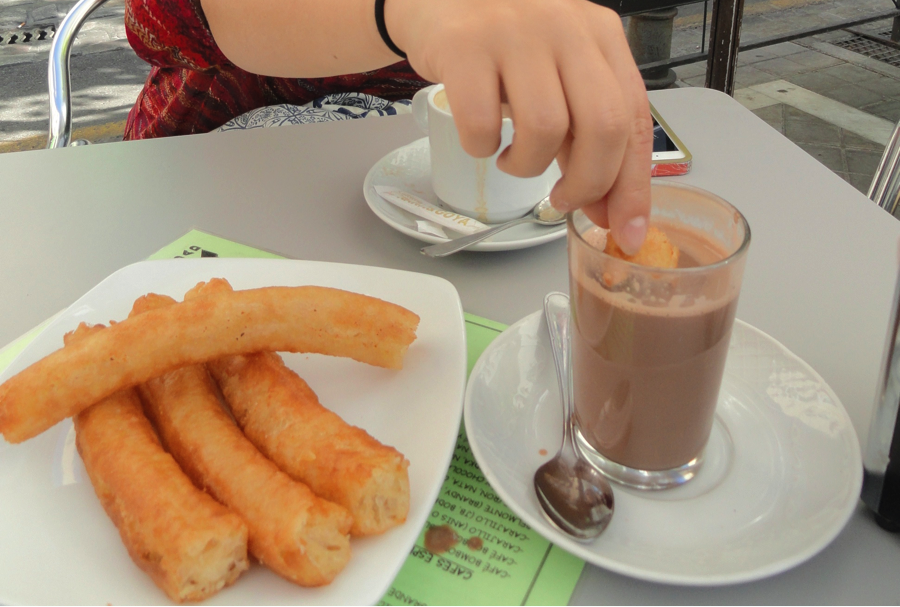
This was one of my FAVORITE mornings!  Olivia had toast drizzled with olive oil with crushed tomatoes spread on it.  Tim had bread, tomato, and tortilla espanola (a potato/egg tortilla).  I had churros (fried dough) dipped in chocolate.  SO good!


We tried to get churros several times after these, but weren't successful until Friday morning when we were leaving Huelva to travel to La Linea.  When we went out to the car, there was a long line of people waiting for churros.  A man was frying them in a huge vat, and as fast as he could cook them his wife was packaging them.  No chocolate for dipping, but they were hot and DELICIOUS!


Sometimes we just had ham and cheese on bread.  It wasn't always WHAT we ate, but WHERE we ate it!


In Huelva near the apartment where we stayed, on the beach in Portugal, and in Sintra.


I had fish and chips in the British Territory of Gibraltar!


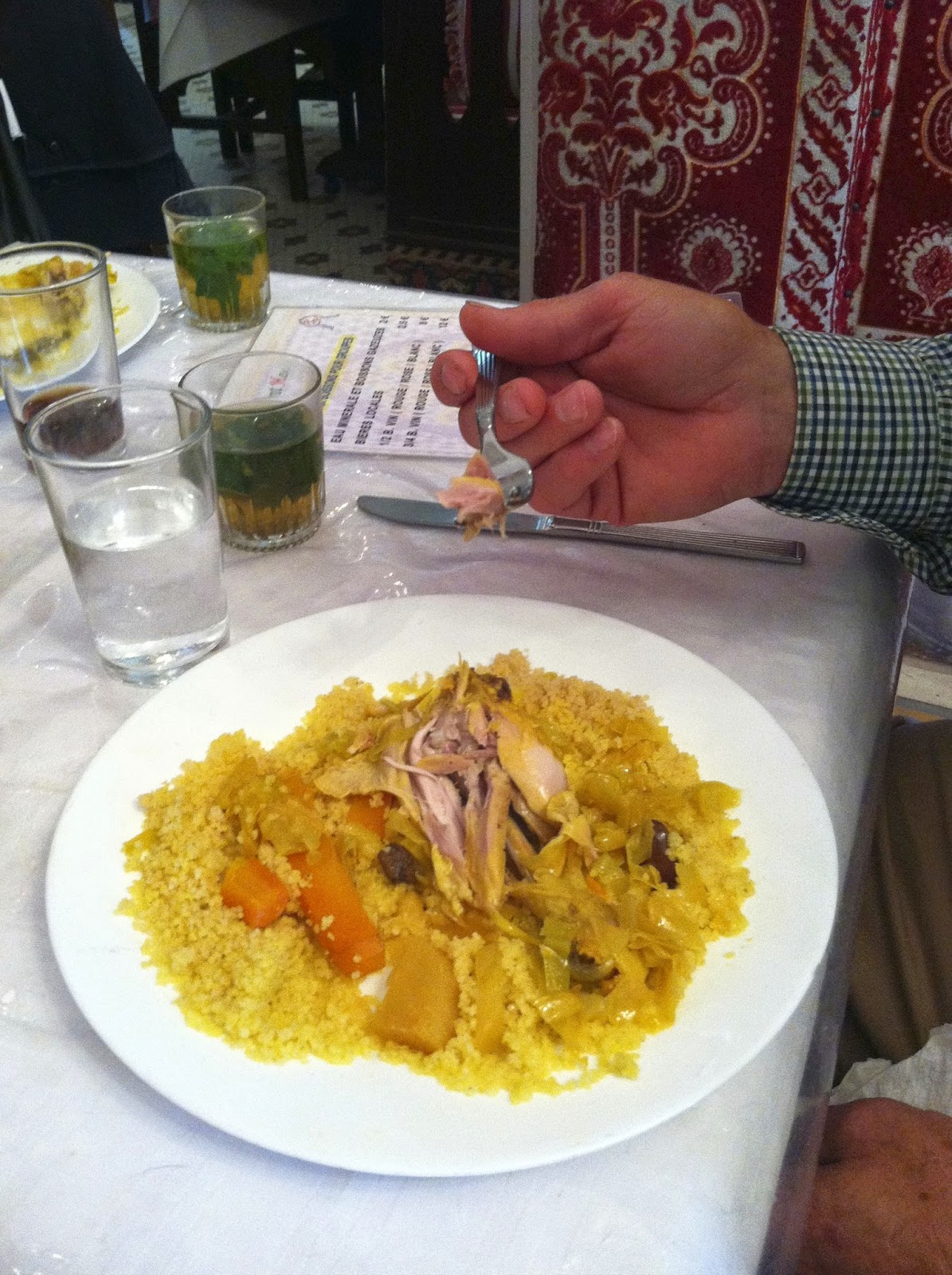
We loved our Moroccan lunch in Tangier.  The first course was a delicious soup.  It was a little spicy, but not too much.  The second course was a "mystery meat" kabob.  It looked a little bit like hamburger meat squished on a stick, and it was really good.  Maybe camel?  The main dish was chicken and vegetables over couscous.  We had a delicious dessert that was like pie crust with honey on it.  It was a little like baklava, but the pastry wasn't as thin and it wasn't as layered.  At the end of the meal the servers brought hot tea with fresh mint in it.  Not sure what everything was, but I would eat it again.


Some of our favorite meals were our "picnics" of cookies and chips, or bread and cheese and strawberries.


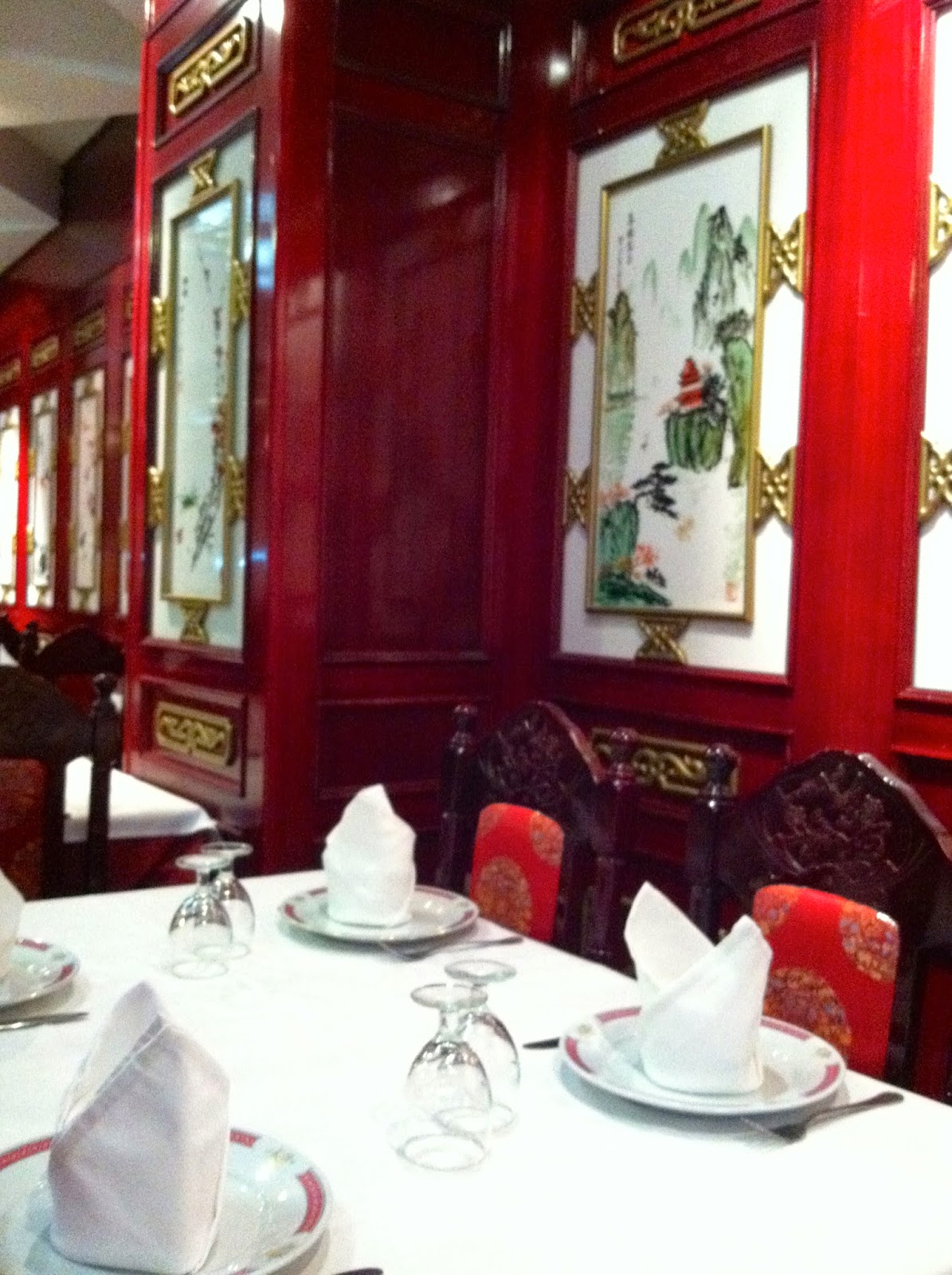
We ate french fries at McDonalds, had drinks at Burger King, ate pizza in La Linea, and had Chinese food our last night in Huelva.

We certainly didn't go hungry.  No diets.  Lots of carbs.  But we walked so much that nobody gained any weight.

YAY!

Let's go back.